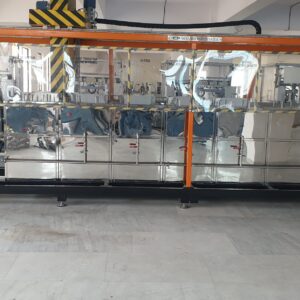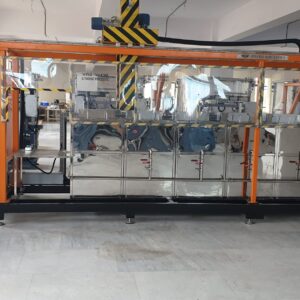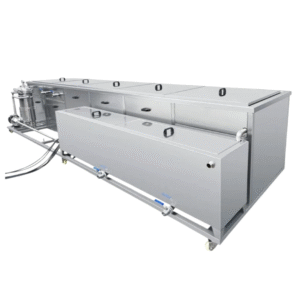
It means the system moves parts through several distinct process stages, such as cleaning, rinsing and sometimes drying, rather than relying on a single tank for the entire process.
Spray washing uses pressurized jets to clean parts, while multistage ultrasonic systems use cavitation across sequential tanks. Some production lines combine both approaches depending on the soil type and part geometry.
Higher-volume manufacturing environments, such as automotive components, precision engineering and metal parts production, often need multi stage lines to keep up with throughput and maintain consistent solution quality across cycles.
It depends on the configuration. Multi stage systems are typically built with dedicated rinse stages, and drying can be added as a further stage depending on the facility’s requirements.
A multi stage line generally needs more floor space than a single tank, since it houses sequential stages, but the layout can be configured around your existing facility footprint.