
Contaminated instruments cost industries more than they realize — delayed production, failed quality audits, equipment damage, and in medical settings, even patient safety risks. Traditional cleaning methods like manual scrubbing, solvent wiping, or pressure washing often fail to remove deeply embedded oil, grease, carbon deposits, and microbial contamination from complex instrument surfaces. This is exactly where a professional instrument cleaner powered by ultrasonic technology changes the game. At Hisashi Ultrasonic, with over 25 years of manufacturing experience, we have helped hundreds of industries across India achieve contamination-free, precision-grade cleaning, consistently and cost-effectively.
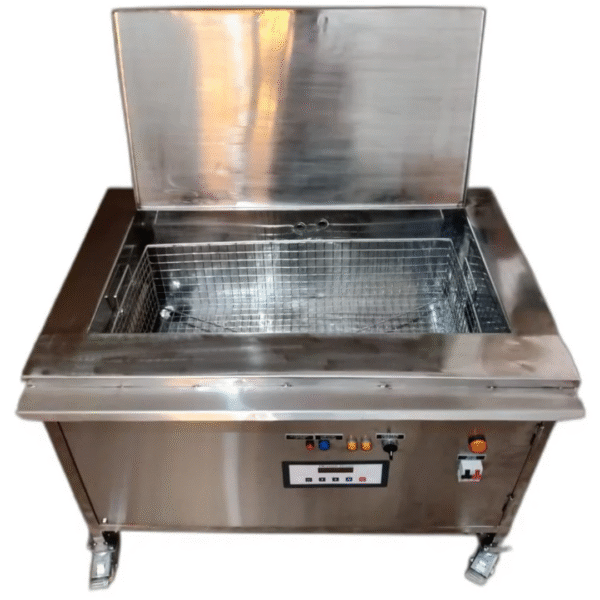
An instrument cleaner is a specialized machine or system designed to remove contaminants — such as oil, grease, rust, carbon, biological residue, and industrial debris — from tools, components, and precision instruments. Unlike a standard wash or wipe-down, a professional instrument cleaner delivers deep, consistent, and repeatable cleaning at a microscopic level.
In the context of ultrasonic technology, an instrument cleaner works by generating high-frequency sound waves (typically between 25 kHz and 130 kHz) through a cleaning solution. These waves create millions of microscopic bubbles through a process called cavitation. When these bubbles collapse near a surface, they release intense localized energy that dislodges contaminants from every surface, including blind holes, threads, crevices, and internal channels — that no brush or cloth can ever reach.
The result: a thorough, damage-free, and chemical-efficient cleaning process that improves instrument life and meets the strictest industry standards.
Many businesses underestimate the true cost of poor cleaning. A substandard instrument cleaner does not just leave dirt behind, it creates downstream problems that impact quality, compliance, and profitability.
Here is what a professional ultrasonic instrument cleaner solves:
Ultrasonic instrument cleaners are not limited to one sector. Their versatility makes them the preferred choice across a wide range of demanding industries:
Surgical instruments — scalpels, forceps, endoscopes, implants — require spotless, sterile cleaning before autoclaving. An ultrasonic medical instrument cleaner removes biological debris from every groove and joint, reducing the risk of cross-contamination and meeting hospital hygiene protocols.
Engine components, fuel injectors, carburetors, gearbox parts, and brake assemblies accumulate heavy grease and carbon. Ultrasonic cleaning cuts degreasing time dramatically while delivering results that manual cleaning cannot match.
Post-soldering flux residue on PCBs can cause circuit failures. An ultrasonic PCB instrument cleaner safely removes flux, dust, and ionic contamination without physical contact, protecting fragile components.
Fuel injection nozzles, aerospace components, optical parts, and dies demand micron-level cleanliness. Ultrasonic cleaning achieves this repeatably, batch after batch.
From molds and dies to valves and hydraulic components, any manufacturing setup dealing with oils, coolants, or surface coatings benefits from an industrial instrument cleaner in the production workflow.
Industry | Common Contaminant | Recommended Cleaner |
Medical & Surgical | Blood, protein, biofilm | Medical Ultrasonic Cleaner |
Automotive | Grease, carbon, scale | Automotive Ultrasonic Cleaner |
Electronics / PCB | Flux, solder, ionic residue | PCB Cleaning Machine |
Precision Engineering | Cutting oil, swarf, dust | Multi-Stage Ultrasonic Cleaner |
Mold & Die | Release agents, rubber residue | Ultrasonic Mold Cleaning Machine |
Not all instrument cleaners are built equal. When evaluating a system for your facility, prioritize these features:
With over 25 years of hands-on experience in designing and manufacturing ultrasonic cleaning systems, Hisashi Ultrasonic is one of India’s most trusted names in industrial precision cleaning.
Choosing the right instrument cleaner is not just a purchasing decision — it is an investment in product quality, compliance, and operational efficiency. Ultrasonic technology offers unmatched cleaning depth, repeatability, and safety across every industry it serves. Whether you manage a surgical facility, an automotive plant, or a precision manufacturing unit, a professionally designed ultrasonic instrument cleaner from Hisashi Ultrasonic can transform your cleaning process.
Contact Hisashi Ultrasonic today for a free cleaning trial or custom machine consultation. Call us at +91 9871013815 or email info@hisashiindustries.com.
The best medical instrument cleaner uses 40 kHz ultrasonic frequency, heated cleaning solution, and a rinse stage to remove biological residue completely. Hisashi Ultrasonic’s medical-grade cleaner is specifically designed to prepare surgical instruments for sterilization, meeting hospital hygiene standards.
A typical ultrasonic cleaning cycle takes between 5 to 20 minutes depending on the contamination level, instrument complexity, and cleaning solution used. Multi-stage systems with wash, rinse, and drying can complete a full cycle in under 30 minutes.
Yes. High-frequency ultrasonic cleaners (80 kHz and above) are specifically designed for sensitive PCBs and electronic assemblies. The cleaning action is gentle enough to protect delicate circuits while effectively removing flux and ionic contamination. Hisashi’s PCB Cleaning Machine is built for exactly this purpose.
The right cleaning chemical depends on the contaminant and material. For metals with grease or oil, a water-based alkaline degreaser works best. For brass and copper, a specialized brass cleaning chemical is recommended. Hisashi supplies compatible chemicals along with its cleaning machines.
Absolutely. Hisashi Ultrasonic specializes in custom-designed cleaning systems. You can send your component samples for a free cleaning trial, and our engineers will recommend and build the most effective instrument cleaner configuration for your exact production requirement.