
Medical instruments play a critical role in patient care, surgical procedures, diagnostics, and laboratory operations. Every instrument that comes into contact with patients must remain free from contaminants, biological debris, blood residues, and microscopic particles. Traditional cleaning methods often struggle to reach intricate instrument surfaces, hinges, lumens, and hard-to-access areas. As healthcare facilities continue to prioritize patient safety and infection control, ultrasonic cleaning technology has become an essential part of modern instrument reprocessing.
An ultrasonic cleaner for medical instruments offers a highly effective, reliable, and efficient solution for removing contaminants before sterilization. By utilizing advanced sound wave technology, ultrasonic cleaners deliver superior cleaning performance while reducing manual labor and minimizing the risk of instrument damage.
Among the trusted names in ultrasonic cleaning technology, hisashiultrasonic provides innovative solutions designed to meet the demanding requirements of hospitals, clinics, laboratories, dental practices, and medical device manufacturers.
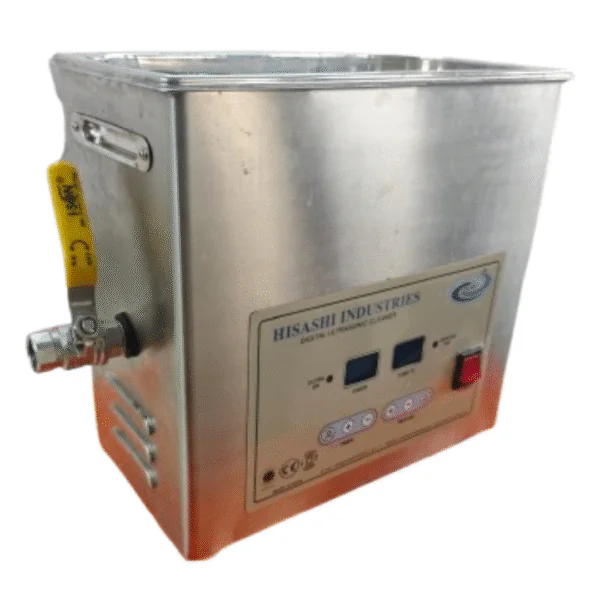
An ultrasonic cleaner is a specialized cleaning system that uses high-frequency sound waves to generate microscopic bubbles within a cleaning solution. This process, known as cavitation, creates millions of tiny bubbles that rapidly form and collapse.
The implosion of these bubbles releases energy that dislodges contaminants from instrument surfaces. Unlike manual scrubbing, ultrasonic cleaning reaches hidden areas, narrow channels, joints, and complex geometries without causing unnecessary wear.
Medical facilities commonly use ultrasonic cleaners for:
The cleaning process prepares instruments for disinfection and sterilization while helping maintain their functionality and longevity.
Healthcare-associated infections remain a significant concern worldwide. Even small amounts of residual contamination can compromise sterilization effectiveness and increase patient risk.
Proper cleaning offers several benefits:
Healthcare professionals understand that sterilization cannot compensate for inadequate cleaning. Therefore, ultrasonic cleaning serves as a critical first step in the instrument reprocessing workflow.
The ultrasonic cleaning process follows a simple but highly effective sequence.
Operators fill the ultrasonic tank with water and an appropriate medical-grade cleaning solution.
Technicians place instruments into a basket or tray to ensure proper exposure to ultrasonic energy.
Transducers attached to the tank convert electrical energy into high-frequency sound waves.
The sound waves create alternating pressure cycles within the liquid. These pressure changes generate microscopic bubbles.
As the bubbles collapse, they release localized energy that removes dirt, blood, tissue residues, proteins, and other contaminants.
After cleaning, staff rinse, inspect, and sterilize the instruments according to established protocols.
This process delivers consistent cleaning results while reducing the dependence on manual scrubbing.
Different healthcare environments require different ultrasonic cleaning solutions. Selecting the right system depends on instrument volume, cleaning requirements, and facility size.
Benchtop units suit smaller medical facilities, dental clinics, outpatient centers, and laboratories.
Key benefits include:
Many facilities choose hisashiultrasonic benchtop systems for daily cleaning tasks because they offer dependable performance in a compact footprint.
Large hospitals and medical device manufacturers often require industrial-scale cleaning systems.
Features include:
Industrial systems handle large instrument loads while maintaining consistent cleaning quality.
Multi-stage systems support complex cleaning workflows.
Typical stages include:
These systems streamline instrument processing and improve operational efficiency.
Heat enhances cleaning performance by improving detergent activity and reducing contaminant adhesion.
Advantages include:
Many healthcare facilities prefer heated ultrasonic cleaners for challenging cleaning applications.
The healthcare industry continues to adopt advanced cleaning technologies.
Emerging trends include:
Automated monitoring systems improve process control and documentation.
Modern ultrasonic systems consume less energy while maintaining strong cleaning performance.
Connected equipment supports maintenance tracking and performance monitoring.
Facilities increasingly seek systems that simplify validation and compliance reporting.
Multi-frequency systems provide greater flexibility for cleaning various instrument types.
Manufacturers continue to innovate as healthcare facilities demand higher standards of cleanliness and operational efficiency.
Ultrasonic cleaners have transformed the way healthcare facilities clean and prepare medical instruments. Their ability to remove contaminants from complex surfaces, delicate components, and hard-to-reach areas makes them an indispensable part of modern instrument reprocessing.
From surgical instruments and dental tools to laboratory equipment and endoscopic devices, ultrasonic cleaning delivers consistent results that support patient safety, infection prevention, and regulatory compliance. By reducing manual labor, improving cleaning quality, and protecting valuable instruments, ultrasonic cleaners help healthcare organizations maintain the highest standards of care.
For hospitals, clinics, laboratories, and medical device professionals seeking dependable ultrasonic cleaning solutions, hisashiultrasonic provides advanced systems engineered for performance, durability, and efficiency. Investing in a high-quality ultrasonic cleaner is not just a cleaning decision—it is a commitment to safer healthcare, improved operational excellence, and long-term instrument reliability.