
Food safety has become a paramount concern for consumers, commercial kitchens, and food processing industries alike. Traditional washing methods—like soaking or rinsing under tap water—often fall short when it comes to removing microscopic pathogens, stubborn dirt, wax, and complex chemical pesticides. This is where modern engineering steps in.
As a leading manufacturer, hisashiultrasonic builds state-of-the-art ultrasonic vegetable and fruit washing machines designed to provide pristine, chemical-free cleaning. By leveraging advanced acoustic technology, our systems offer an eco-friendly and highly efficient solution to modern agricultural contamination challenges
To appreciate how an ultrasonic vegetable and fruit washing machine works, we must look at the physics of sound waves. These machines use high-frequency sound waves, transmitted through water.
The heart of ultrasonic cleaning is acoustic cavitation. When high-frequency sound waves travel through a liquid medium, they generate alternating high-pressure and low-pressure cycles:
The Expansion Phase: During the low-pressure cycle, small vacuum bubbles or cavities form within the water.
The Compression Phase: During the high-pressure cycle, these tiny bubbles cannot sustain their size and collapse violently.
The Micro-Jet Effect: The implosion of these bubbles creates microscopic shockwaves and high-velocity liquid micro-jets.
These micro-jets hit the surface of the fruits and vegetables, stripping away contaminants at a microscopic level. Because these bubbles are smaller than a single grain of sand, they penetrate deep into the uneven textures of broccoli, the pores of strawberries, and the crevices of leafy greens.
Many households and commercial kitchens still rely on hand-washing or basic water baths. However, modern agriculture presents hazards that manual rinsing simply cannot eliminate.
Chemical manufacturers design modern pesticides to resist rain. Because these chemicals are hydrophobic (water-resistant), simple water rinsing does not wash them away.
Pathogens like E. coli, Salmonella, and Listeria naturally adhere to plant tissues. They form biofilms—protective layers of bacteria that stick firmly to the skin of produce. Hand scrubbing can bruise delicate fruits, yet it still leaves these biofilms intact.
Apples, cucumbers, and citrus fruits are often coated in artificial wax to prolong shelf life and improve appearance. This wax traps dirt and pesticides underneath it. An ultrasonic washer from hisashiultrasonic breaks down this wax layer without damaging the underlying food tissue.
As a dedicated manufacturer, hisashiultrasonic engineers various models to suit different scales of operation. Understanding these types helps businesses and consumers choose the right equipment.
These are compact, countertop units designed for everyday household use. They usually feature a tank capacity of 3 to 10 liters.
Best For: Families, small apartments, and health-conscious individuals.
Key Benefit: Low power consumption, quiet operation, and easy-to-use digital timers.
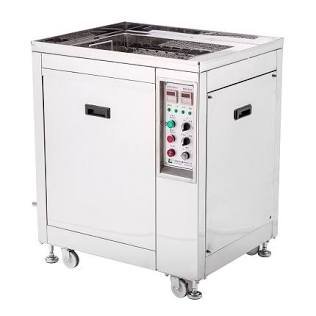
Designed for restaurants, hotels, schools, and small-scale catering businesses, these machines feature larger stainless-steel tanks (ranging from 15 to 50 liters).
Best For: Commercial kitchens handling moderate daily volumes of produce.
Key Benefit: Built with heavy-duty transducers, digital temperature controls, and robust drainage systems for continuous operation.
For large-scale food processing plants, agricultural cooperatives, and massive packaging facilities, we manufacture fully automated industrial lines. These systems combine ultrasonic cavitation with bubble-washing mechanisms and spray rinses.
Best For: High-volume food manufacturers and exporters.
Key Benefit: Continuous throughput, automated water recycling, and integration into existing assembly lines.
| Machine Type | Typical Capacity | Ideal Target Market | Core Advantage |
| Residential | 3L – 10L | Households / Home Kitchens | Compact, user-friendly |
| Commercial | 15L – 50L | Restaurants / Catering | Heavy-duty, mid-volume |
| Industrial | 100L+ (Continuous) | Food Processing Plants | Fully automated, high-speed |
Investing in an ultrasonic washing machine yields immediate returns in food safety, shelf-life extension, and operational efficiency.
99% Pesticide Reduction: Independent laboratory tests show that ultrasonic cavitation breaks the chemical bonds of common agricultural pesticides, rendering them harmless.
Eradication of Microorganisms: The shockwaves destroy the cellular walls of bacteria, fungi, and viral contaminants on the produce surface.
Preservation of Nutrients: Unlike chemical sanitizers or scalding water, ultrasonic waves do not alter the nutritional value, flavor, or texture of the food.
Extended Shelf Life: By removing the mold spores and bacteria responsible for spoilage, fruits and vegetables stay fresh for significantly longer periods.
Water and Time Efficiency: Ultrasonic cleaning cleans an entire batch of vegetables in 3 to 5 minutes, using a fraction of the water required for continuous tap rinsing.
Operating our machinery requires no specialized technical training. Following a standard sequence ensures optimal cleaning and longevity of the equipment.
Fill the stainless steel tank with clean water. Ensure the liquid level covers the minimum fill line before turning on the machine to avoid damaging the internal transducers.
Place the produce into the customized stainless steel basket. Lower the basket slowly into the water tank, ensuring the water completely submerges all items.
Program the digital timer via the control panel. For delicate items like berries, set the cycle for 2 to 3 minutes. For denser items like potatoes or carrots, select a 5-minute cycle.
Press the start button. The machine will emit a characteristic low-pitched humming sound as acoustic cavitation begins cleaning the produce.
Once the timer expires, lift the basket out of the tank. Give the produce a brief rinse with clean running water to wash away loose surface debris, then let it air dry.
The demand for clean, unadulterated food continues to grow worldwide. Traditional washing methods can no longer protect consumers from chemical residues and resilient pathogens. Incorporating an ultrasonic vegetable and fruit washing machine into your production line or commercial kitchen guarantees a superior standard of food sanitation.
As an established manufacturer, hisashiultrasonic provides reliable, high-performance engineering tailored to your specific output requirements. Protect your customers, enhance the shelf life of your produce, and upgrade your food safety infrastructure with our advanced cavitation technology.