
In modern manufacturing, precision and absolute cleanliness dictate success. Microscopic contaminants, stubborn machining oils, metallic burrs, and chemical residues compromise component integrity, lead to part failure, and drain operational budgets. Standard single-stage washing tanks or manual scrubbing methods can no longer meet strict industrial standards.
Enter the Multi-Stage Ultrasonic Cleaning Machine.
When precision engineers and manufacturing facility managers need zero-defect cleanliness, they choose custom engineering. Hisashi Ultrasonic designs and builds high-performance multi-stage ultrasonic systems that streamline production lines, reduce labor overhead, and deliver pristine surface preparation every single cycle.
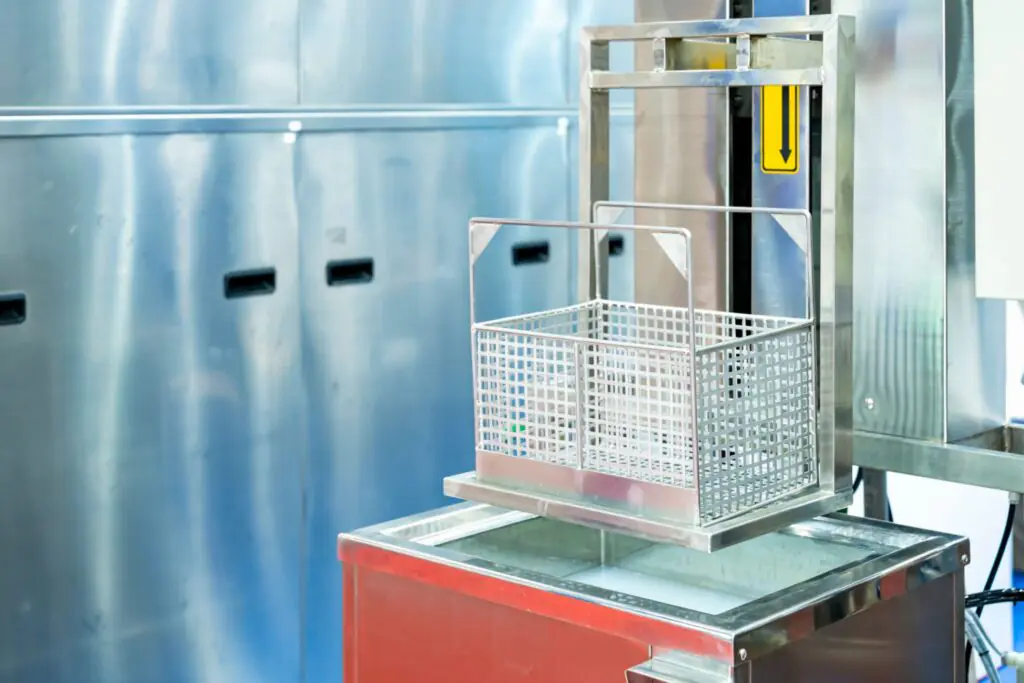
A single-stage ultrasonic cleaner uses one tank filled with liquid solution to dislodge dirt via acoustic energy. While effective for simple maintenance tasks, a single tank falls short in high-volume or high-precision industrial environments. Recontamination occurs when dirty components drip back into the same bath, leaving residue behind.
A Multi-Stage Ultrasonic Cleaning Machine solves this by organizing the cleaning workflow into a sequence of dedicated chambers. Each chamber targets a specific phase of the process:
Pre-washing / Degreasing: Removes heavy surface oils and bulk debris.
Ultrasonic Scrubbing: Uses acoustic cavitation to scrub micro-pores and blind holes.
Cascading Rinsing: Cleans off detergent traces with clean, running water.
Deionized (DI) Water Rinsing: Prevents mineral spotting on optical or electronic parts.
Hot Air or Vacuum Drying: Eliminates all moisture to prepare components for assembly, coating, or packaging.
By isolating each phase into its own stainless-steel vessel, Hisashi Ultrasonic ensures that contaminants leave the system permanently rather than cycling back onto your parts.
To appreciate the efficiency of a Hisashi Ultrasonic multi-stage system, you must understand the underlying physics: acoustic cavitation.
High-Frequency Electrical Signal
          │
          ▼
Transducers (Piezoelectric)
          │
          ▼
High & Low Pressure Waves in Fluid
          │
          ▼
Microscopic Vacuum Bubbles Form (Cavitation)
          │
          ▼
Bubble Implosion & Micro-Jets (up to 135,000 psi)
          │
          ▼
Contaminants Dislodged Without ScratchingTransducers Convert Energy: High-frequency electrical energy converts into mechanical sound vibrations using piezoelectric transducers attached to the tank walls.
Pressure Waves Expand and Contract: These sound waves travel through the aqueous cleaning fluid, creating alternating high-pressure (compression) and low-pressure (rarefaction) cycles.
Micro-Bubbles Form: During low-pressure phases, tiny vacuum bubbles form in the liquid.
Implosive Energy Releases: As high-pressure waves hit these bubbles, they collapse inward violently. This implosion generates localized temperatures up to 5,000°K and micro-jets of fluid travelling at speeds up to 400 km/h.
Surface Scrubbing: Thousands of these micro-implosions occur every second, lifting grease, carbon, flux, and particulate matter off the substrate—even inside internal threads and complex internal channels.
Every manufacturing workflow presents unique challenges. Hisashi Ultrasonic custom-configures multi-stage systems based on part geometry, material chemistry, and output targets. Below is a breakdown of a standard 4-stage automated setup:
┌─────────────────┐    ┌─────────────────┐    ┌─────────────────┐    ┌─────────────────┐
│     STAGE 1     │    │     STAGE 2     │    │     STAGE 3     │    │     STAGE 4     │
│   Ultrasonic    │───>│ Cascading Rinse │───>│   DI Rinse /    │───>│ Hot Air Drying  │
│    Wash Tank    │    │     Chamber     │    │ Passivation Tank│    │     Chamber     │
└─────────────────┘    └─────────────────┘    └─────────────────┘    └─────────────────┘
The initial chamber holds a specialized water-based detergent or eco-solvent maintained at optimal cleaning temperatures ($50^\circ\text{C}$ to $70^\circ\text{C}$). Ultrasonic transducers operate at frequency bands ranging from 28 kHz to 120 kHz depending on part delicate features. High amplitude waves rapidly break down grease, polishing pastes, and heavy machining oils.
Once contaminants detach from the substrate, transferring parts directly to drying creates water marks due to suspended detergent solids. Stage 2 utilizes a cascading overflow immersion rinse. Fresh water enters from the bottom of the secondary tank, flows upward against part movement, and spills over a weir. This continuous displacement ensures dirty rinse water stays out of the system.
For medical devices, aerospace fasteners, and semiconductor wafers, city tap water leaves microscopic mineral deposits (calcium, silica). The third stage utilizes Deionized (DI) water with optional spray-under-immersion jets. If rust protection is required for carbon steel, Hisashi Ultrasonic incorporates a passivation or rust-inhibitor bath into this stage.
Moisture causes oxidation on ferrous metals and ruins electronic substrates. The final stage uses forced HEPA-filtered hot air blowers or a vacuum drying chamber. Vacuum drying lowers the boiling point of water inside small blind holes, flashing off moisture in seconds without water spots.
High-precision cleaning spans nearly every modern engineering field. Hisashi Ultrasonic multi-stage machinery delivers exceptional results across diverse industries:
Automotive engines, fuel injectors, transmission gears, and turbochargers require absolute cleanliness before assembly. Microscopic metal shavings left in a fuel injector can destroy fuel atomization patterns. Multi-stage systems flush carbon deposits, coolant residues, and metal fines out of internal passageways.
Surgical instruments, orthopedic implants (hip and knee joints), and hypodermic needles demand strict biocompatibility standards (ISO 13485). Hisashi Ultrasonic builds validation-ready multi-stage systems with electropolished stainless steel tanks, bio-burdens containment, and continuous DI water recirculation loop integration.
Aerospace components face extreme thermal and mechanical stresses. Turbine blades, hydraulic valves, and avionics housings must be free of liquid contaminants before non-destructive testing (NDT) or thermal coating. Multi-stage ultrasonic cleaning removes scale and oxidation without altering delicate dimensional tolerances.
Printed Circuit Boards (PCBs), silicon wafers, and MEMS devices require non-destructive particulate removal. Using high frequencies (80 kHz–130 kHz), Hisashi Ultrasonic platforms remove sub-micron dust and flux residue without flexing micro-wires or fracturing delicate solder joints.
Lenses, camera modules, and optical prisms must achieve absolute clarity prior to antireflective coating application. Multi-stage setups strip polishing compounds, fingerprints, and oils, followed by zero-spot DI water rinsing and HEPA drying.
A single cleaning failure can halt an assembly line, spoil expensive coatings, or trigger costly product recalls. A Multi-Stage Ultrasonic Cleaning Machine provides a reliable solution, transforming surface preparation into a repeatable, automated science.
At Hisashi Ultrasonic, we engineer robust, efficient, and fully customized multi-stage cleaning equipment built for demanding manufacturing environments. Whether you need a compact manual unit for precision medical components or an automated inline line for high-volume automotive parts, our engineering team will build the right system for your facility.
Contact Hisashi Ultrasonic today to schedule a component cleaning trial and discover how advanced acoustic cavitation can elevate your production standards.