
n manufacturing, many quality problems begin with something small and often ignored, contamination on components. Oil residue, machining coolant, polishing paste, dust, carbon deposits, and microscopic metal particles can remain on parts even after machining is complete. These hidden contaminants can lead to coating failure, leakage, poor assembly fitment, rejection during inspection, and customer complaints.
If your production team is facing repeat cleaning issues, inconsistent output, or rising rejection rates, the problem may not be machining—it may be cleaning. This is why forward-looking manufacturers are upgrading to a Fully Automatic Ultrasonic Cleaning Plant instead of relying on outdated manual washing systems.
A modern ultrasonic cleaning machine combines automation, precision, and repeatability to deliver superior cleaning results with less labor, lower error rates, and higher production efficiency. For industries where quality matters, it has become a practical investment rather than an optional upgrade.
A Fully Automatic Ultrasonic Cleaning Plant is an advanced industrial cleaner designed to clean components using ultrasonic cavitation while automating the entire cleaning cycle.
The system uses high-frequency sound waves inside a cleaning liquid to create microscopic bubbles. These bubbles collapse rapidly and remove contaminants from surfaces, holes, grooves, threads, and internal passages.
Unlike manual tank cleaning, a fully automatic system can include programmed stages such as:
This ensures every batch receives the same cleaning standard.
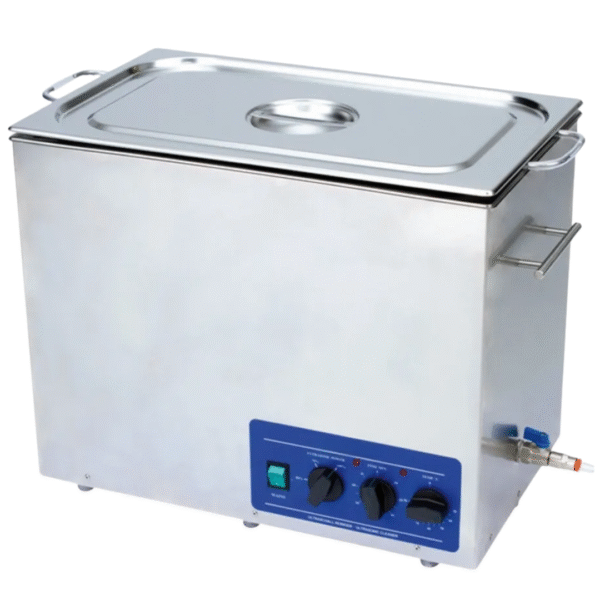
Many factories still depend on manual washing, solvent dipping, brushing, or pressure air cleaning. These methods often create inconsistent results.
Common problems include:
When production scales up, these issues become expensive.
Manual cleaning may appear lower-cost initially, but it often increases hidden costs through rework, labor dependency, slow cycle times, and quality variation.
An automated ultrasonic cleaning machine provides consistent, deep cleaning with faster throughput and lower operator dependency. It improves repeatability, especially for precision parts.
Factories usually switch when they experience:
A Fully Automatic Ultrasonic Cleaning Plant helps solve practical production issues across industries.
Residual oil or particles can cause fitment, sealing, coating, or cosmetic failures. Ultrasonic cleaning removes hidden contamination.
Automated transfer and multistage systems reduce delays and improve output.
Every cycle follows preset parameters for time, temperature, and stage sequence.
Less manual handling means fewer process variations and easier manpower planning.
Cleaner parts mean stronger finishing quality, better assembly performance, and more reliable deliveries.
Single-stage washing may clean visible dirt, but modern manufacturing often needs more.
A multistage Fully Automatic Ultrasonic Cleaning Plant can include cleaning, rinsing, drying, and protection stages. This creates a more reliable process.
Dirt removed in the cleaning tank does not carry into final rinse stages.
Each stage performs a dedicated function under controlled settings.
Components move automatically through stages with less waiting time.
Integrated drying helps parts move directly to packing or assembly.
Perfect for plating, coating, inspection, and assembly operations.
Choosing a machine is important, but choosing the right process partner matters more. Hisashi Industries supports manufacturers with cleaning systems designed around real production problems.
Their solutions include:
Instead of offering one generic model, the focus is on matching the system to the component, contamination type, and production target.
This makes Hisashi Industries suitable for automotive, engineering, aerospace, electronics, and other precision manufacturing sectors.
These systems are widely used in:
Any industry requiring repeatable cleanliness can benefit.
5. Does it help reduce rejection rates?
Yes, contamination-related defects are significantly reduced with controlled cleaning.
If your factory is facing cleaning inconsistency, rising rejection rates, customer complaints, or slow manual processes, it may be time to modernize your cleaning operation.
A Fully Automatic Ultrasonic Cleaning Plant offers a smarter solution through precision cleaning, multistage automation, and repeatable quality standards. It helps manufacturers improve throughput while protecting product quality.
For companies serious about reducing losses and improving process reliability, advanced ultrasonic cleaning is a strategic upgrade.
If you are facing contamination issues, coating failures, assembly problems, or rejection losses, now is the right time to upgrade to a Fully Automatic Ultrasonic Cleaning Plant.
Contact Us at Hisashi Industries to discuss your components, cleaning challenges, and production goals.
You can even send your component for cleaning trial evaluation and explore the most suitable ultrasonic cleaning solution for your process. The right system today can improve your production quality for years to come.